Why S355? The Thinking Behind Material Selection for Marine Fabrications
Material selection for fabricated marine equipment can look relatively straightforward at the design stage. Find the required strength, choose a suitable grade and move on.
In practice, there is considerably more to it.
Strength is obviously important, but material also needs to suit the way a component will actually be manufactured. Weldability, toughness, availability, machining, distortion during welding, inspection and the possibility of future repair all become part of the decision.
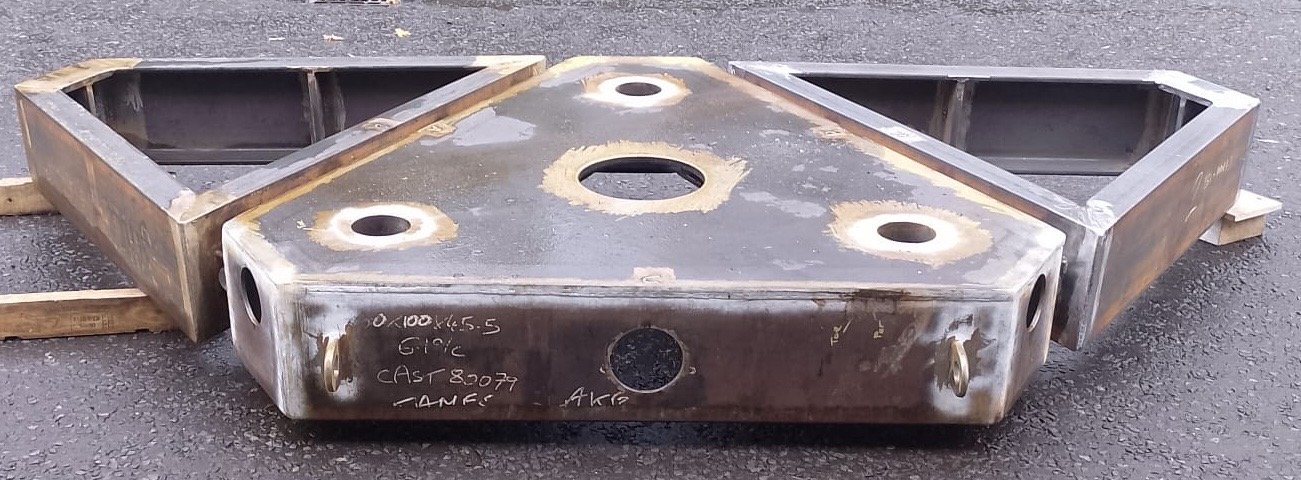
During the development of our current seabed equipment, we have been working extensively with S355 structural steel, including S355J2+N plate and S355J2H c sections.
It has been a useful reminder of why S355 is so commonly encountered in heavy engineering and fabricated structures.
More Than the 355 MPa
The obvious feature of S355 is its specified minimum yield strength of 355 MPa for relevant lower thickness ranges.
It is easy to concentrate on that number, particularly when comparing different steel grades, but simply moving to a higher-strength material doesn’t necessarily result in a better design.
Higher-strength steels can potentially allow reductions in section thickness and weight, but that needs to be considered alongside welding requirements, toughness, availability, cost and how the finished component will actually be fabricated.
For relatively substantial welded structures, the balance between these characteristics can be more important than strength alone.
What Does J2+N Actually Mean?
Steel designations can look like little more than a collection of letters and numbers if you don’t work with them regularly.
In S355J2+N, the S identifies it as structural steel and the 355 relates to its minimum specified yield strength.
The J2 designation relates to impact toughness, with a specified Charpy impact requirement at −20°C.
The +N designation means the material is supplied in a normalized or normalizing-rolled condition.
For equipment intended for demanding environments, toughness is an important consideration. A material’s ability to resist yielding under a steadily applied load is only one part of its behaviour. Its performance under impact and at lower temperatures also needs to be considered.
Welding Changes the Picture
Once welding enters the equation, material selection becomes even more interesting.
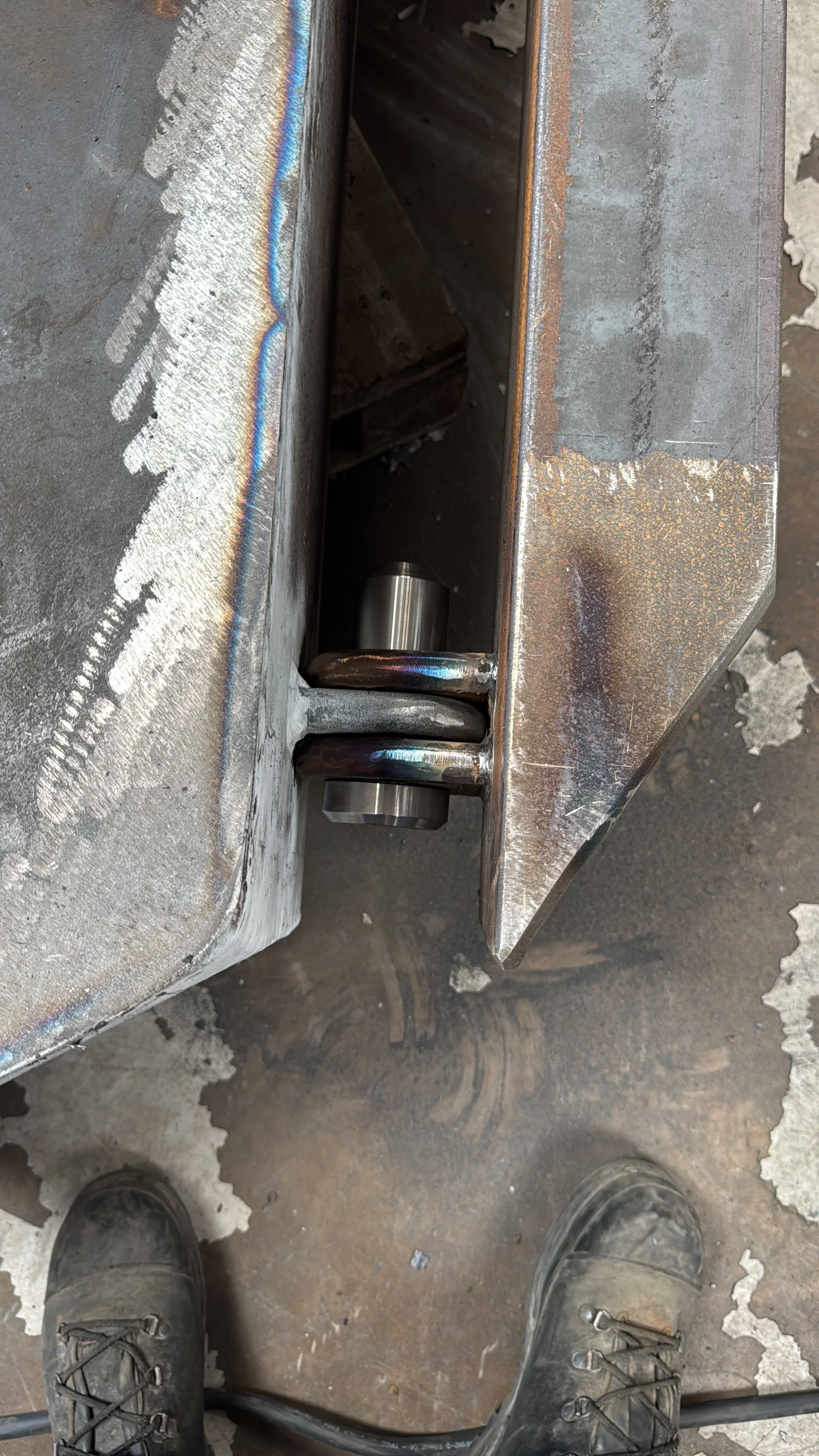
A fabricated assembly isn’t simply a collection of pieces of parent material. Welding introduces significant localised heat, creates a heat-affected zone and can introduce residual stresses and distortion.
The larger and heavier the fabrication becomes, the more obvious some of these effects can be.
This means the steel grade needs to be considered alongside the welding process, material thickness, joint preparation, consumables, welding sequence and applicable welding procedures.
S355 is well understood from a welding perspective, which is one of the reasons it is so widely used in fabricated engineering structures.
That doesn’t remove the need for proper welding controls. It simply means there is a substantial amount of established knowledge and experience available for working with it.
What Looks Simple on CAD Isn’t Always Simple in Steel
This has probably been one of the more useful aspects of building our current equipment.
On a CAD model, components line up perfectly. Plates remain flat. Holes stay exactly where they were drawn and welds don’t introduce heat.
Steel doesn’t behave quite so conveniently.
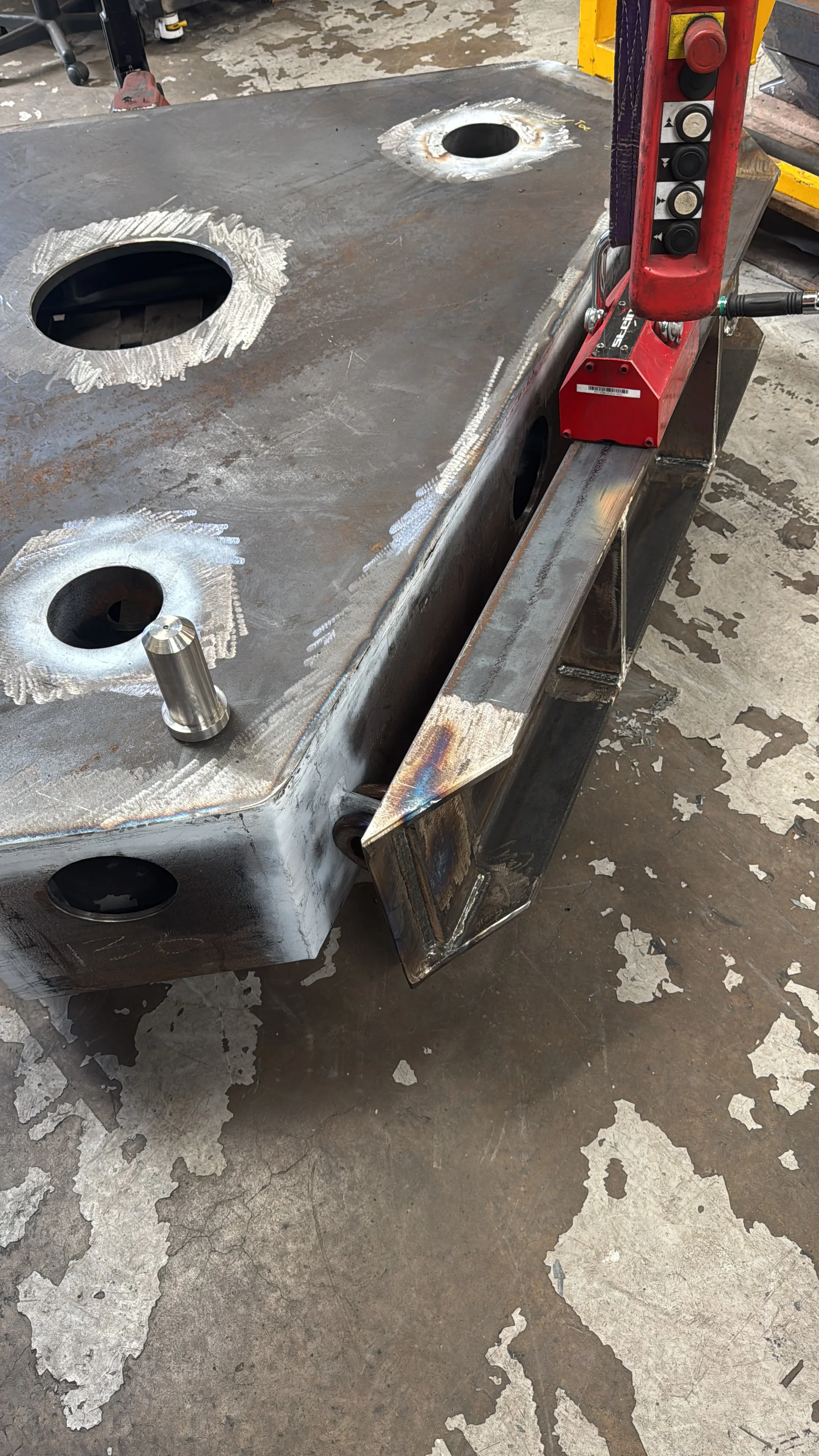
Once plate has been profiled, prepared, positioned and welded, tolerances and distortion become very real considerations.
That doesn’t necessarily mean something has gone wrong. Some level of distortion is an inherent part of welded fabrication and needs to be understood and controlled.
It also reinforces the value of considering fabrication while something is still being designed rather than treating manufacturing as a completely separate stage.
Inspection Tells You Something
The same applies to inspection and NDT.
It can be tempting to view inspection as the final stage where a fabrication is effectively given a pass or fail.
In reality, it can provide useful feedback about the manufacturing process itself.
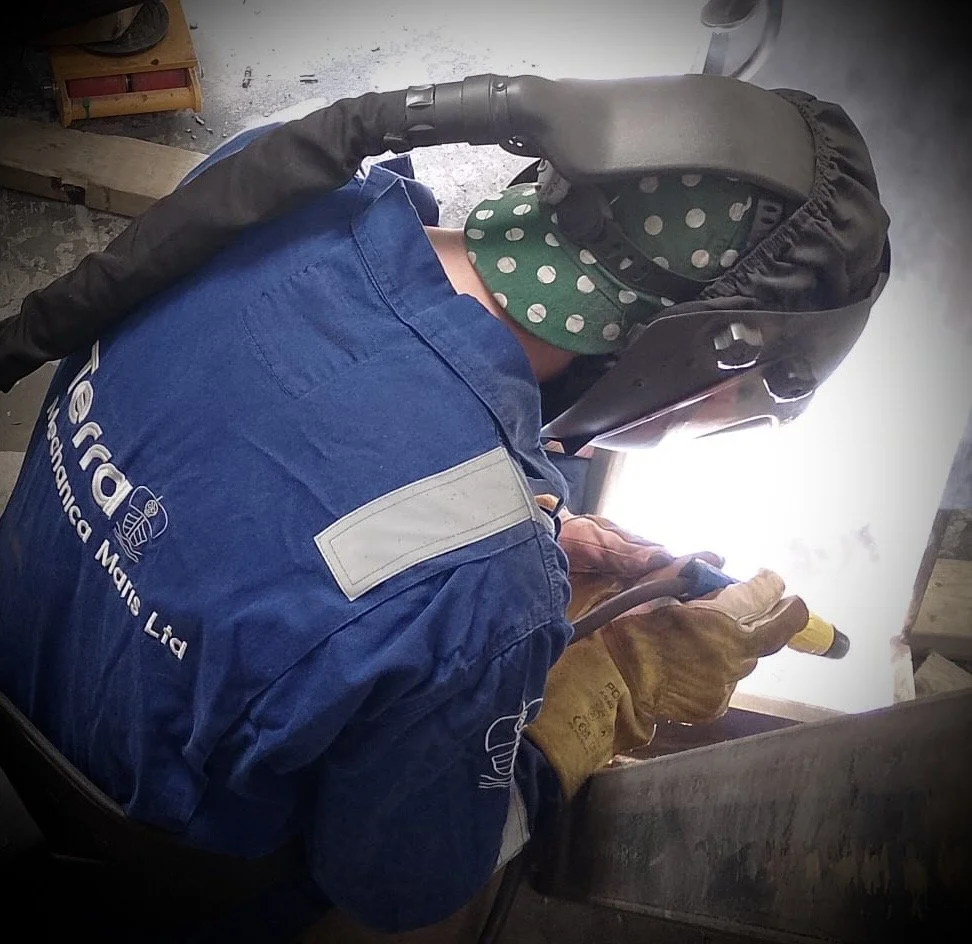
Our recent work has included magnetic particle inspection (MPI) of welded components as well as dimensional checks and physical test assembly.
Where an issue is identified, understanding why it occurred is arguably more useful than simply repairing it. Welding parameters, preparation, access, sequencing or even the original design can all contribute.
That information can then be carried into the next fabrication.
Why Not Stainless Steel?
Marine equipment often leads to an understandable question: why not simply manufacture everything from stainless steel?
Corrosion resistance is certainly attractive, but material selection is rarely that straightforward.
Cost, mechanical properties, welding requirements, availability, fabrication complexity and the overall corrosion-protection strategy all need to be considered.
In many marine structures, a suitable structural steel combined with an appropriate coating or corrosion-protection system can be a more practical solution.
Stainless steels and other specialist alloys absolutely have their place, particularly for components where their specific properties justify their use, but they aren’t automatically the best choice simply because equipment will operate around seawater.
The Practical Side of Material Selection
Working through the current build has reinforced something fairly simple: material selection can’t really be separated from manufacturing.
A steel grade can look ideal when considered purely from its mechanical properties, but the complete picture includes how easily it can be sourced, cut, machined, welded and inspected, as well as how it will perform in service.
S355 isn’t an exotic material, and that’s partly the point.
It offers a useful combination of strength, toughness, weldability, availability and fabrication experience, which explains why it appears in so many engineering applications.
Sometimes the interesting part of engineering isn’t finding the most advanced material available.
It’s understanding why a relatively ordinary material is actually the right one for the job.