Building More Than a Prototype
When we started manufacturing the base for our new seabed sampling equipment, we knew we weren’t just building a piece of equipment. We were testing Terra.
This is the first major structural component of the project, and it’s been the perfect opportunity to put our management systems, workshop and manufacturing processes through their paces.
It all starts long before the first weld is struck. From procurement and supplier selection through to goods-in inspection, material traceability and machining, every stage has allowed us to test the quality systems we’ve spent so much time developing.
Like any real engineering project, we’ve learned plenty along the way.
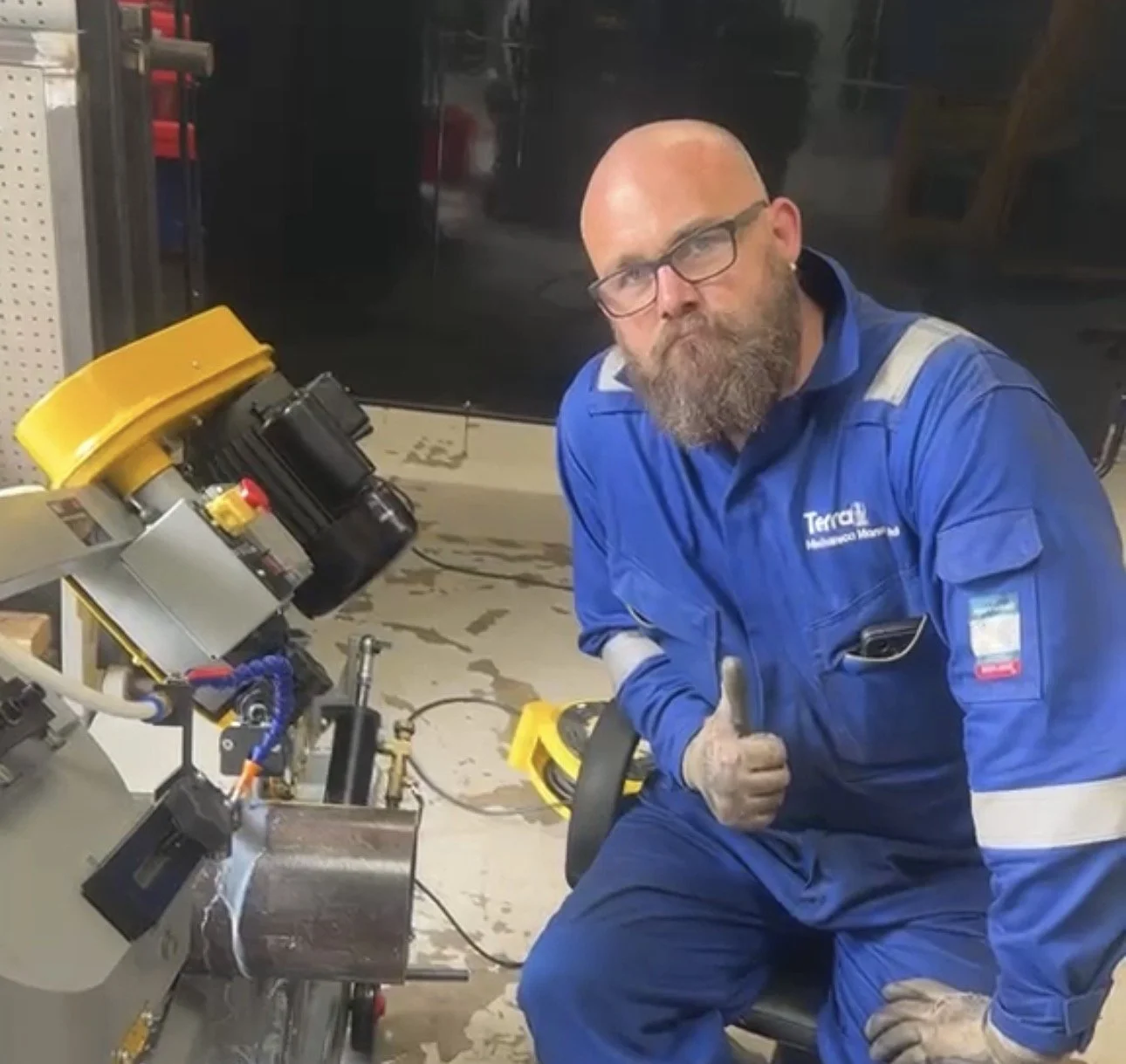
We quickly realised our old bandsaw had served us well, but it simply wasn’t up to the job for this level of fabrication. Rather than work around the limitation, we invested in a larger, more capable machine. Sometimes a project tells you exactly where your next investment needs to be.
The machining threw up a few lessons too. Some of the larger holes pushed the limits of our existing tooling, so we upgraded to MT4 tooling better suited to the work. It’s a relatively small change, but one that will improve every large fabrication project we undertake in the future.
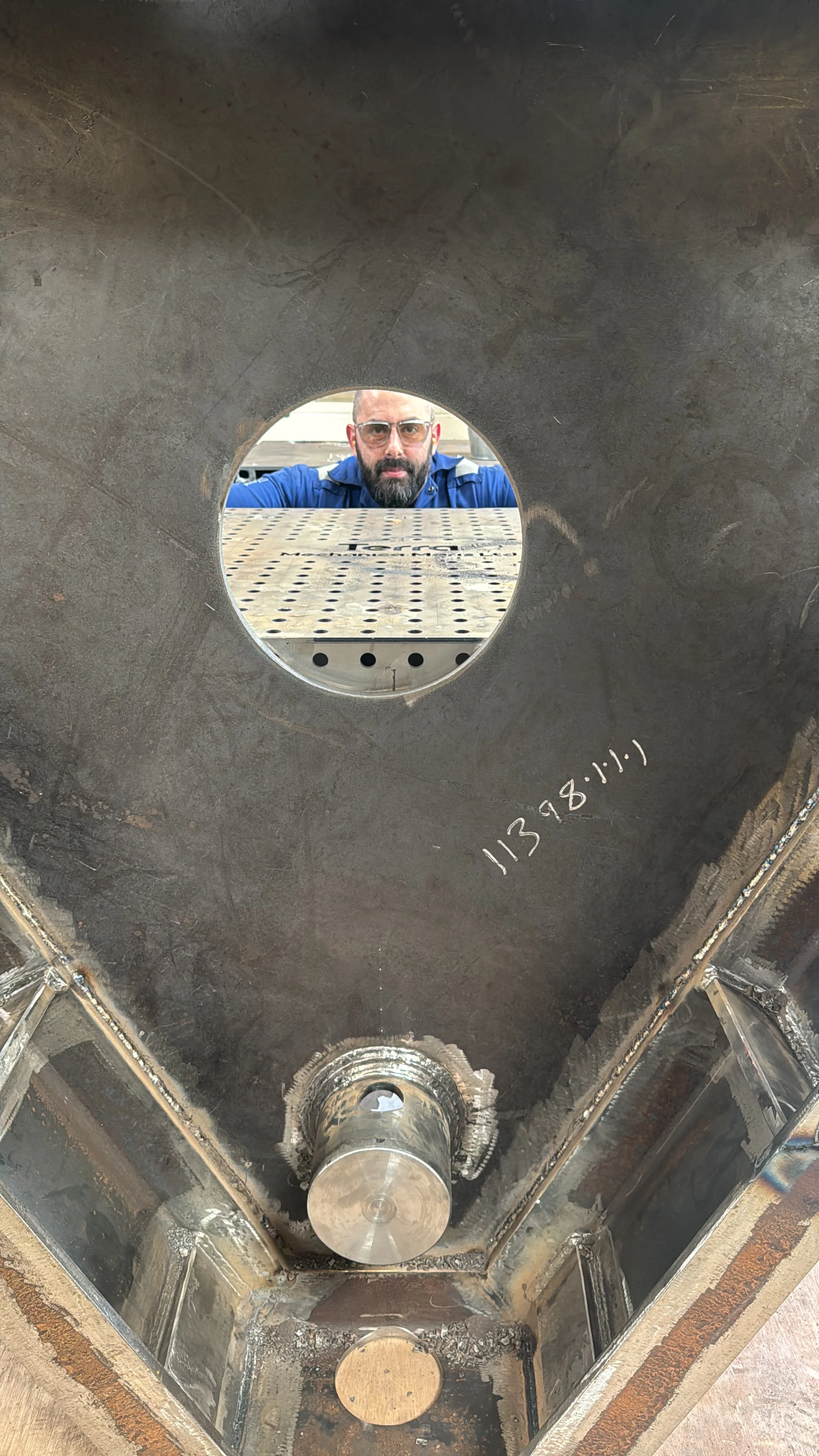
There were a few pleasant surprises as well. One that still makes me smile was discovering our CNC plasma table could accurately cut holes inside 300 mm channel sections. We weren’t entirely sure it would until we tried it, but it worked brilliantly and saved us a considerable amount of machining time.
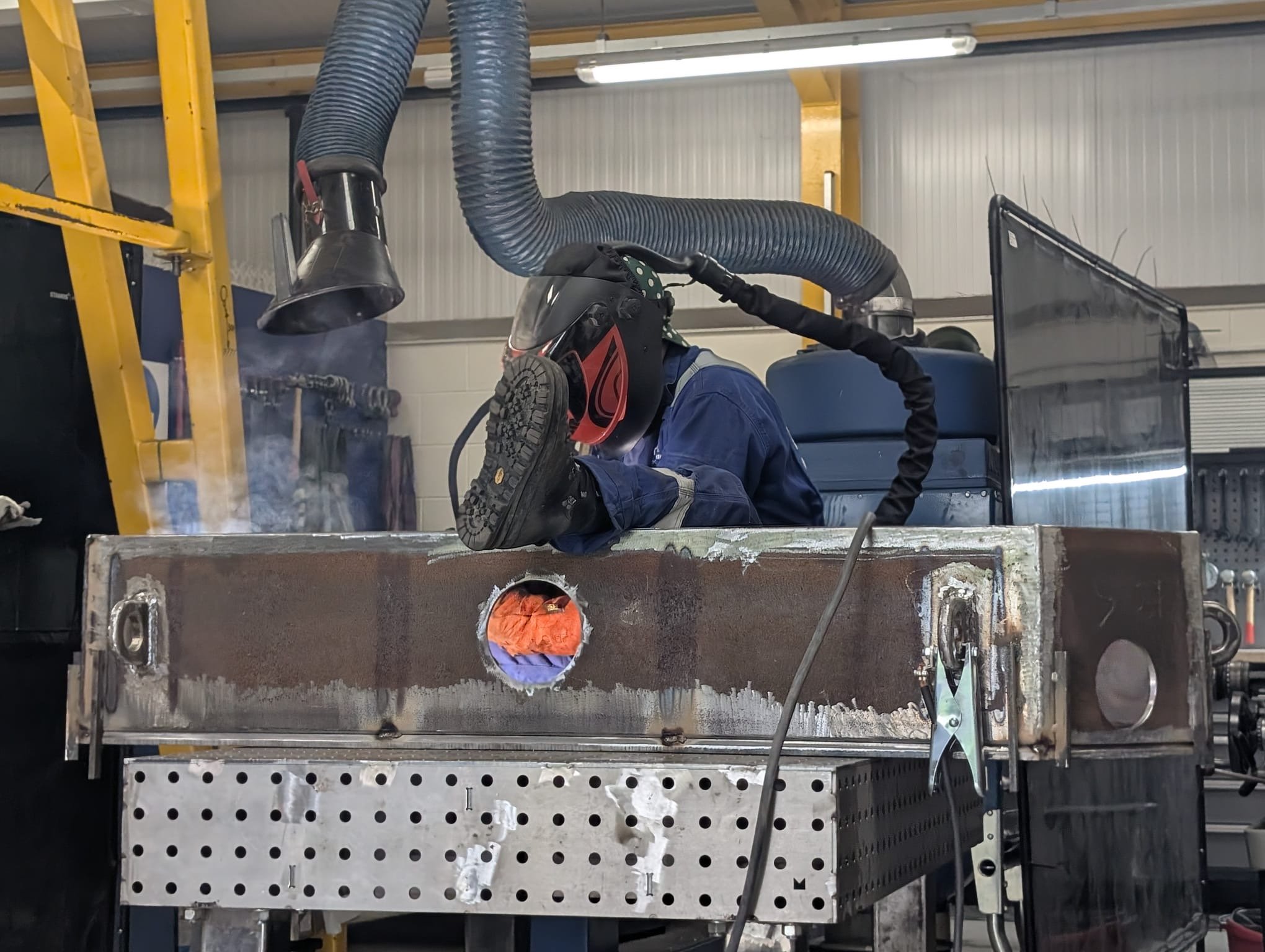
Of course, there has been plenty of welding; probably more than I’d care to count! Hundreds of welds have gone into this first component, all completed in-house. Every joint has been prepared, fitted, welded and checked before moving on to the next stage.
Large fabrications also have a habit of making your workshop feel much smaller than it really is. We’ve become quite good at moving components around, making the most of every square metre and keeping production flowing while a sizeable steel structure occupies the middle of the floor.
The project has also been an excellent training exercise. Real engineering projects provide the best learning opportunities, and it’s been great to continue developing our machining, fabrication and welding skills while building something that will eventually head offshore.
Perhaps the biggest success has been proving our systems. This project has tested everything from purchasing and inspection through to manufacturing, quality control and documentation. It’s highlighted where we can improve, confirmed where our processes work well and given us confidence that we’re building a workshop capable of delivering increasingly complex engineering projects.
We’re now approaching another important milestone. The fabrication is complete and all that’s left is to dress the remaining welds before the base undergoes Magnetic Particle Inspection (MPI). Once that’s complete, the first major structural component will be signed off and we’ll move on to the next phase of the build.
There’s still a long way to go, but it’s satisfying to see the project taking shape. More importantly, every lesson we’ve learned throughout this build strengthens Terra Mechanica Maris for the next challenge.
After all, engineering isn’t just about building equipment;
it’s about continually improving the way you build it.